WORDS THAT WOUNDED · VOLUME II
Words That Wounded
The Patterns We Learned
Understanding Protective Responses and the Beliefs Beneath Them
A painful message can become an everyday pattern: perform perfectly, keep everyone pleased, remain in control, rescue others, or never need help. This volume explores those protective responses and the beliefs beneath them. It introduces a careful way to examine words, triggers, body responses, and recurring behavior, keeping room for evidence, uncertainty, and explanations that do not fit.
You may find this volume helpful if you recognize recurring patterns of overperformance, approval seeking, control, rescue, or withdrawal and want to examine them with compassion, evidence, and biblical discernment.
Begin with a free reader preview.
A manuscript excerpt, table of contents, About the Cover reading, and biblical connections.
Download Free Reader Preview6-page PDF · No registration required
CONTENTS AT A GLANCE
What you’ll explore
Planned coverage · Chapters 14–30
Part III — The Patterns We Learn to Live · Part IV — Finding the Pattern Without Inventing the Story
- Performance, perfection, approval seeking, and the fear of failure
- Shame, visibility, reassurance, control, and authority fear
- Family roles, rescue, conflict, guilt, and the cost of saying no
- Needs, receiving care, rest, scarcity, calling, and anger
- The Word Wound Map and the Five Entry Doors
- Triggers, body responses, and learned protective patterns
- Corroboration and the limits of an assessment
Planned contents
- Planned coverage of manuscript Parts III–IV and Chapters 14–30
- Gathering the Threads IV–VI: recognizing patterns and examining them carefully
- Assessment concepts and their interpretive boundaries
LOOK A LITTLE CLOSER
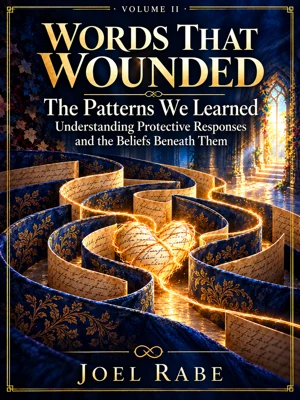
Explore the cover
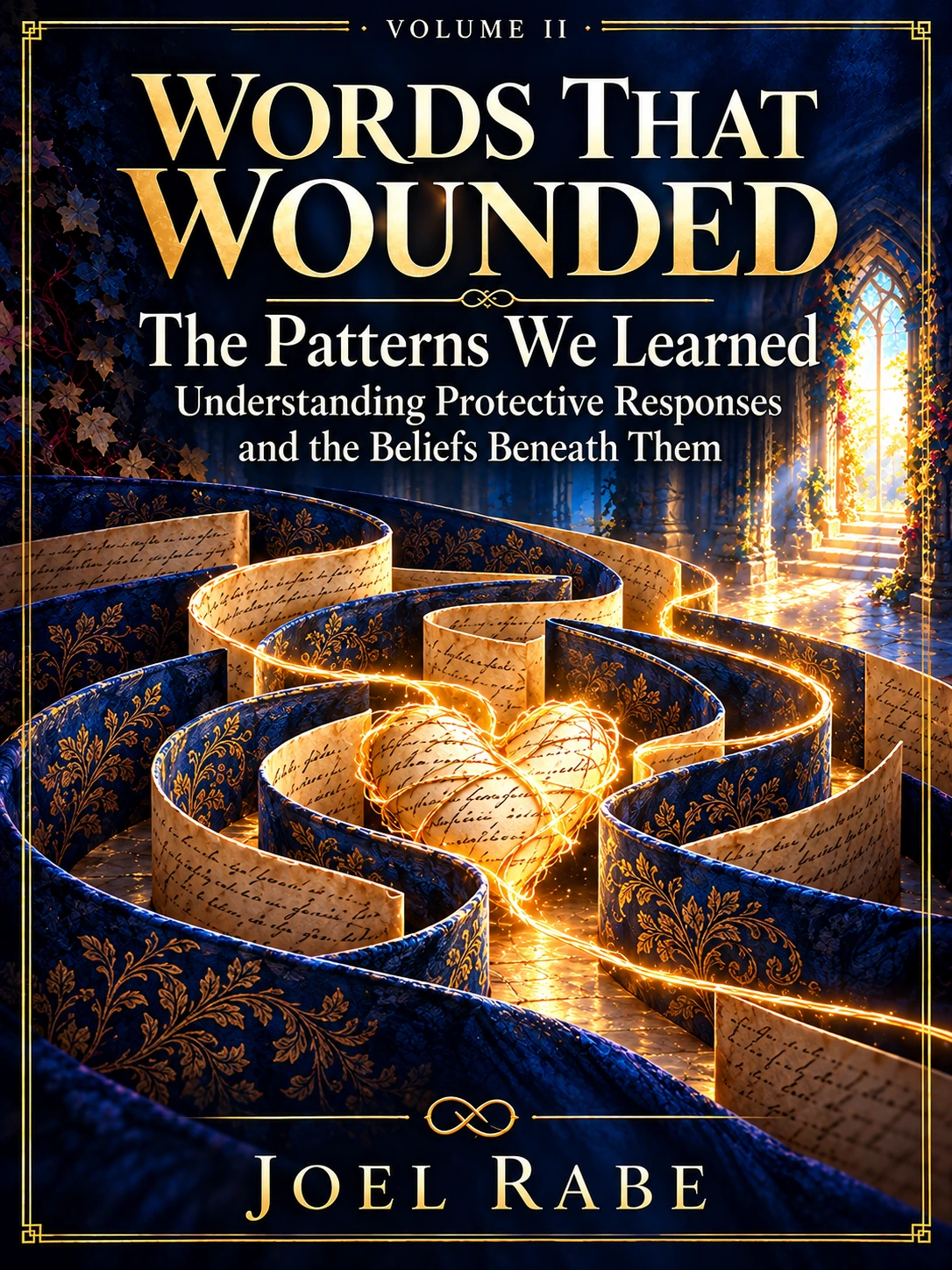
Folded walls picture responses learned for protection. The invitation is to understand them without forcing a story.
An artistic reflection on the book’s themes.
READING THE DESIGN
About the Cover
The maze surrounds a heart that has learned to protect itself. Folded parchment and woven blue ribbons form the familiar routes of performing, pleasing, controlling, rescuing, or withdrawing. You may recognize a path you have walked so often that it now feels like part of who you are.
This volume makes room to examine that path with compassion and honesty. Romans 12:2 calls us toward transformation through the renewing of the mind. The golden thread traces an opening through the maze: an invitation to notice the pattern, consider the belief beneath it, and ask where a more faithful response might begin.
Proverbs 4:26 calls us to ponder the path of our feet. Romans 8:15 also gives us a place from which to begin: the Spirit of adoption, through whom believers cry, “Abba, Father.” We can examine our ways while remembering whose children we are. The heart remains at the center of the cover, now easier to see, held within the hope of belonging to God.
SCRIPTURE & KEY CONCEPTS
Biblical connections
Proverbs 4:26 · KJV
“Ponder the path of thy feet, and let all thy ways be established.”
Romans 12:2 · KJV excerpt
“be ye transformed by the renewing of your mind”
Romans 8:15 · KJV excerpt
“ye have received the Spirit of adoption, whereby we cry, Abba, Father”
Greek: suschematizo - conform to a pattern
In Romans 12:2, suschematizo describes conformity to the pattern of this age. The maze applies that contrast to the examination of learned responses; it does not classify every protective response as sinful.
Lexical reference ↗Hebrew: derek - way, road, course of conduct
Proverbs 4:26 speaks of establishing one's ways. The imagery joins reflection to the actual course of a life: the routes we repeatedly walk.
Lexical reference ↗Aramaic: Abba - Father
Abba is an Aramaic address meaning Father, preserved in Romans 8:15. In this passage, the Spirit’s gift of adoption supports the movement from fear toward belonging. The address carries both closeness and respect.
Lexical reference ↗FROM THE MANUSCRIPT · CHAPTER 14
Performance, Perfection, and the Fear of Failure
Michael and the Email That Was Already Good Enough
Michael is forty-two. His colleagues describe him as dependable, prepared, and unusually careful. If a report is due Friday, he usually has a working draft by Wednesday. If he teaches, he checks the references. If he sends numbers to leadership, he verifies them. None of those habits is inherently unhealthy. In many settings they are evidence of stewardship. The problem becomes visible late on a Thursday night when Michael is sitting at his kitchen table rereading an email he finished almost an hour earlier.
The message is ordinary. Six paragraphs. No crisis. He has checked the dates, attached the correct file, softened one sentence that sounded sharper than he intended, and corrected two typos. He reads it again. Then again. His wife walks through the kitchen and asks whether he is still working. “Just making sure,” he says. He changes a word, changes it back, opens the attachment one more time, and imagines the recipient noticing something he missed. The thought is not simply, I want this to be accurate. It is closer to, If I miss something obvious, they will know I am not as competent as they think I am.
Joel Rabe · Excerpt from the current manuscript
Download the free reader preview ↓KEEP THE REFLECTION CLOSE
A little something to carry with you.
Save a reading card, share it with someone, or print a companion bookmark for your next quiet moment.
Download reading card PNG · 1080 × 1350Print companion bookmark PDF · print at 100% / actual size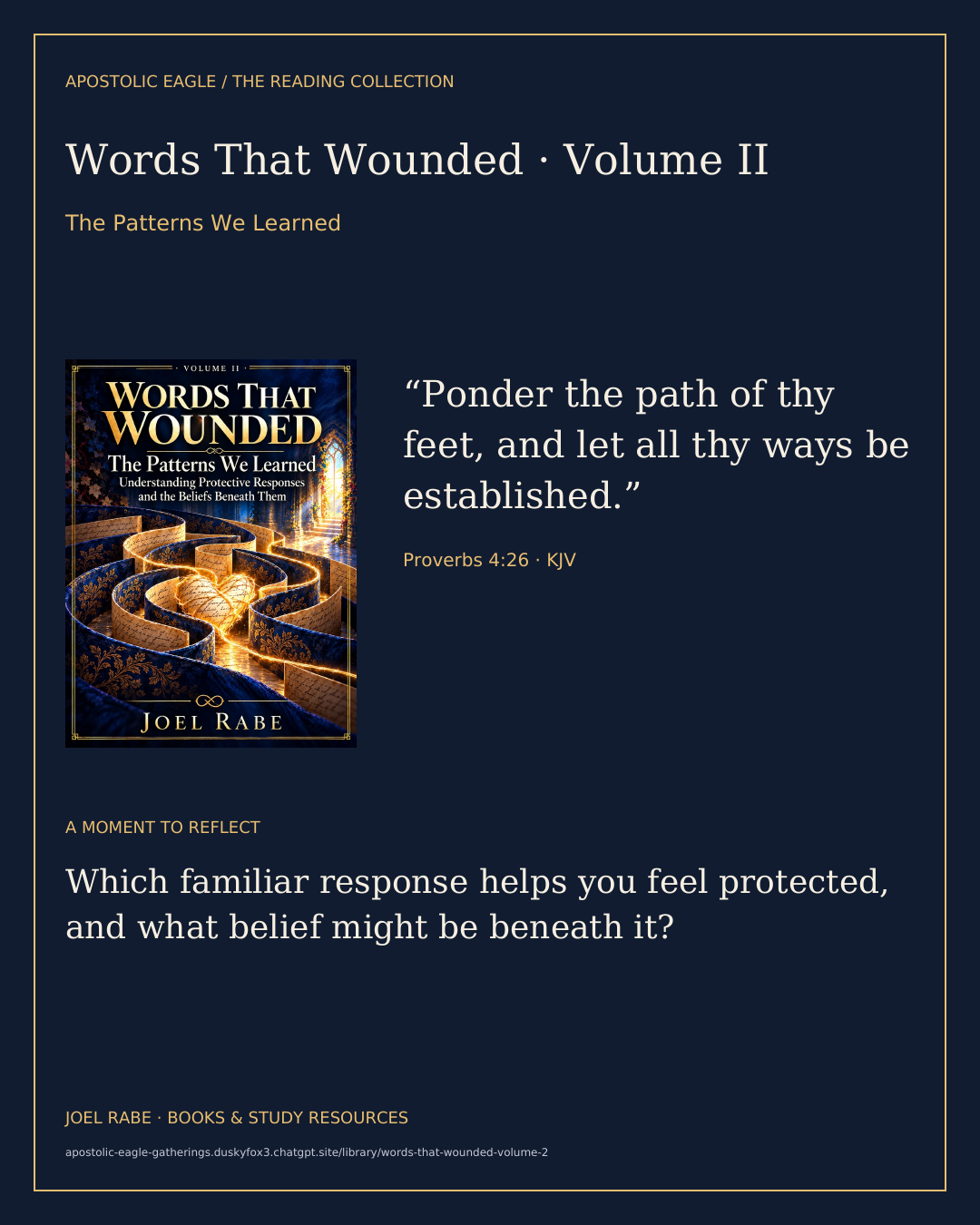
PREPARING FOR RELEASE
Be here for the next chapter.
Your free reader preview is available now. Final chapter divisions, page counts, and release details will be confirmed before purchasing and full-book PDF downloads open.
Leave your email for this resource’s release notification.
THE COMPLETE JOURNEY
Four volumes. One golden thread.
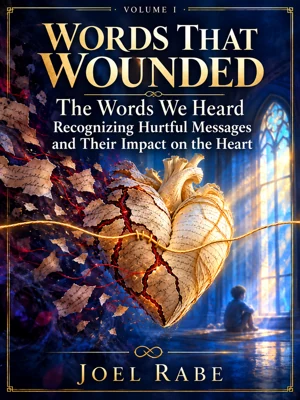
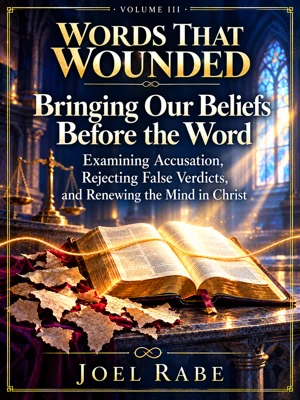
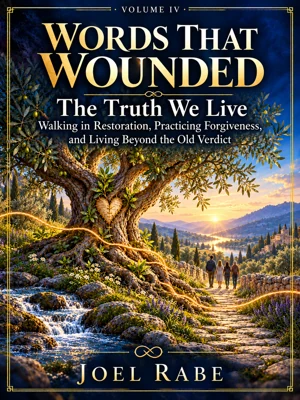
The words we heard. The patterns we learned. Our beliefs before the Word. The truth we live.