WORDS THAT WOUNDED · VOLUME IV
Words That Wounded
The Truth We Live
Walking in Restoration, Practicing Forgiveness, and Living Beyond the Old Verdict
Understanding is a beginning; truth must also become a way of life. The closing volume follows biblical stories of rejection, shame, failure, calling, and restoration, then brings their lessons into grief, repentance, forgiveness, boundaries, and new responses. It explores how to live faithfully when the body still reacts, how to serve without making the wound our calling, and how practiced truth can shape relationships, community, and the next ordinary step.
You may find this volume helpful if you are ready to carry biblical understanding into grief, forgiveness, boundaries, relationships, and calling - including the days when growth feels slow.
Begin with a free reader preview.
A manuscript excerpt, table of contents, About the Cover reading, and biblical connections.
Download Free Reader Preview6-page PDF · No registration required
CONTENTS AT A GLANCE
What you’ll explore
Planned coverage · Chapters 43–60
Part VIII — Biblical Stories of Wound, Identity, and Restoration · Part IX — Restoration in Practice · Part X — Living Beyond the Old Verdict
- Biblical stories of hiding, rejection, inadequacy, shame, and restoration
- Failure without permanent disqualification
- Grief, lament, repentance, mercy, and responsibility
- Replacing a governing belief and practicing a new response
- Forgiveness, reconciliation, trust, and access
- When the body still reacts after the mind knows the truth
- Surrender, calling, ministry, and living beyond the old verdict
Planned contents
- Planned coverage of manuscript Parts VIII–X and Chapters 43–60
- Gathering the Threads X–XII: restoration, practice, and the story carried forward
- The concluding teaching and final synthesis of the series
LOOK A LITTLE CLOSER
Explore the cover
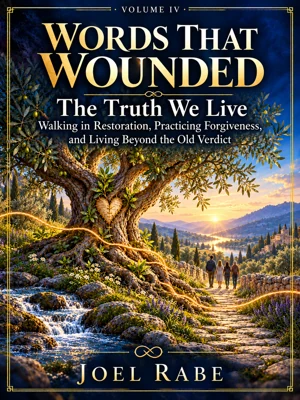
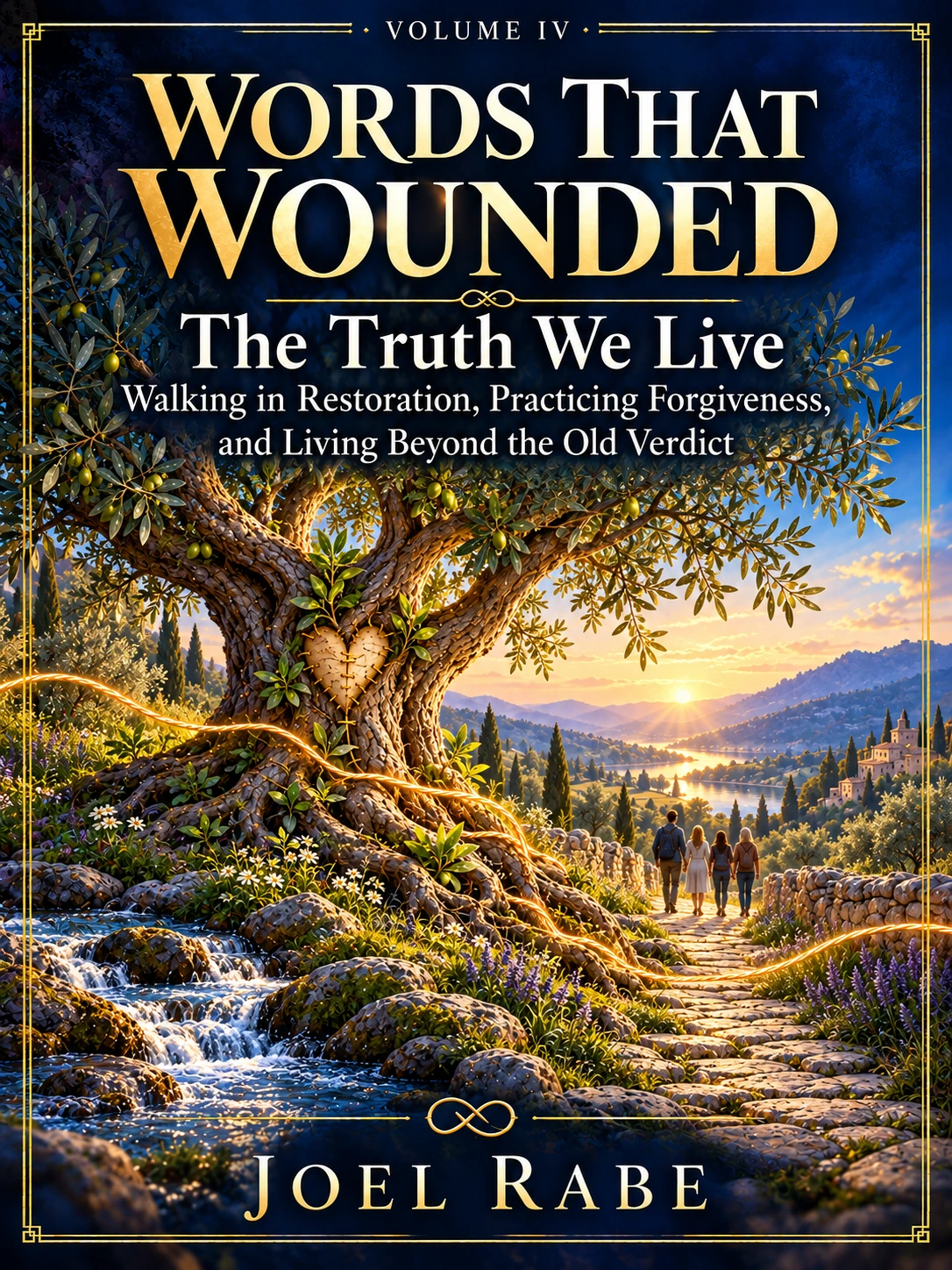
The tree pictures growth over time. This olive-tree artwork is an artistic choice; John 15 uses the distinct image of a vine and branches.
An artistic reflection on the book’s themes.
READING THE DESIGN
About the Cover
The olive tree stands beside clear water, with tender new growth among its established branches. Psalm 1 describes a person rooted in the Lord’s instruction, bearing fruit in season. The gentle dawn reflects patient growth: truth taking root through ordinary days, changing relationships, and faithful choices.
The parchment heart remains within the trunk. Our remembered history travels with us as we grieve, repent, forgive, establish wise boundaries, and practice new responses. The golden thread follows the roots and the path as people walk together. The shared journey makes room for encouragement, accountability, and care.
John 15:4-5 centers fruitfulness in abiding in Christ. We continue with Him while learning to live what we have come to understand. Growth can coexist with sorrow or bodily responses that still need attention. The path remains open before us: one faithful step, one honest conversation, one practiced truth at a time.
SCRIPTURE & KEY CONCEPTS
Biblical connections
Psalm 1:3 · KJV excerpt
“a tree planted by the rivers of water, that bringeth forth his fruit in his season”
John 15:5 · KJV excerpt
“He that abideth in me, and I in him, the same bringeth forth much fruit”
Greek: meno - remain, abide
Meno means remain or abide. John 15:4-5 connects fruitfulness with continuing relationship with Christ. The cover’s olive tree illustrates rooted growth; Jesus’ own illustration in that passage is a vine and its branches.
Lexical reference ↗Hebrew: derek - way, road, course of conduct
The path draws on biblical usage that joins a way walked with a way lived. It supports the volume's focus on truth expressed through conduct and relationships.
Lexical reference ↗FROM THE MANUSCRIPT · CHAPTER 49
Grief, Lament, and What Cannot Be Rewritten
The Human Doorway
Rachel could now name the old belief beneath her fear of abandonment, but the improved interpretation did not return the years, restore the deceased relationship, or produce the apology she once hoped to hear. She was tempted to treat continued grief as evidence that the framework had failed. Scripture offered something more honest than a positive reversal. Lament made room for love, protest, memory, unanswered questions, bodily sorrow, community, and hope without requiring the past to become editable.
The governing question is this: How can believers grieve what cannot be rewritten without turning loss into identity, false guilt, accusation against every present relationship, or denial disguised as faith?
Rachel is a fictional composite whose grief includes both an irreversible loss and conclusions that remain open to examination. Her father’s death cannot be revised. Her belief that every important relationship will end in abandonment can be tested against Scripture and present evidence without treating sorrow as a reasoning error.
An anniversary can make the past feel immediate. Rachel’s body remembers before she has formed a sentence, and the absence remains real after every truthful distinction has been made. Pressure reveals where grief has joined false guilt, isolation, or universal prediction, but it does not make continued sadness a verdict against faith.
Joel Rabe · Excerpt from the current manuscript
Download the free reader preview ↓KEEP THE REFLECTION CLOSE
A little something to carry with you.
Save a reading card, share it with someone, or print a companion bookmark for your next quiet moment.
Download reading card PNG · 1080 × 1350Print companion bookmark PDF · print at 100% / actual size
PREPARING FOR RELEASE
Be here for the next chapter.
Your free reader preview is available now. Final chapter divisions, page counts, and release details will be confirmed before purchasing and full-book PDF downloads open.
Leave your email for this resource’s release notification.
THE COMPLETE JOURNEY
Four volumes. One golden thread.
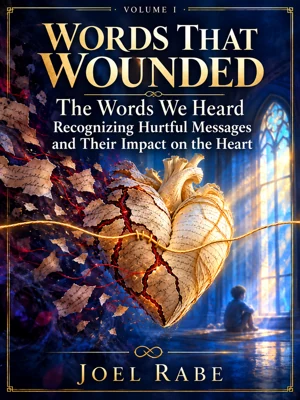
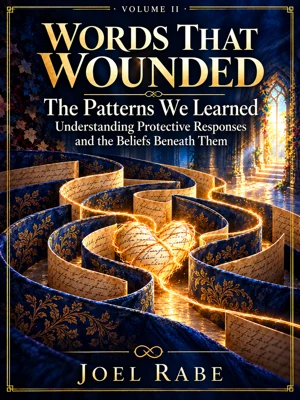
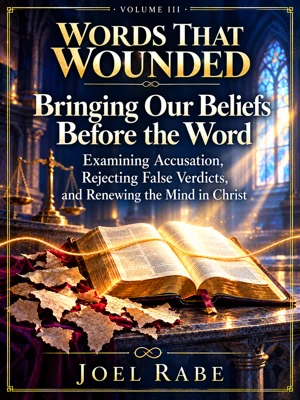
The words we heard. The patterns we learned. Our beliefs before the Word. The truth we live.